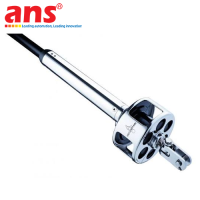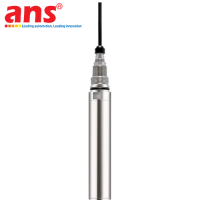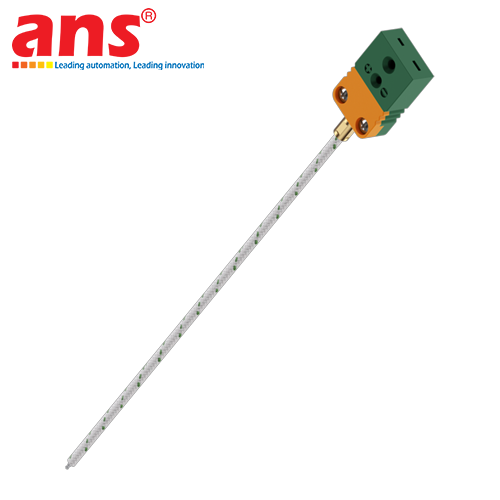
Reckmann GmbH High-Voltage & High-Temperature Type K Cable Sensor (HV-Light Cable Sensor 1 x Type K, HT Cable Sensor 1 x Type K, HV-Light TC Adhesive Probe)
Price: Contact
Brand: Reckmann GmbH
Category: Cảm biến công nghiệp
Supplier: AnhNghiSon
Origin: Germany


 0911472255
The specialized High-Voltage (HV) and High-Temperature (HT) cable thermocouple series manufactured by Reckmann GmbH (Germany) represents a next-generation temperature instrumentation suite engineered specifically for stringent safety qualification protocols in electric vehicle (E-Mobility) development, lithium-ion battery research, and high-voltage power electronics testing.
This high-performance portfolio features three specialized, mission-critical models:
1. HT Cable Sensor 1 x Type K (High-Temperature Cable Sensor for Thermal Runaway Detection): Purpose-engineered to detect and capture the onset of the catastrophic "Thermal Runaway" effect during destructive and non-destructive battery pack abuse tests. The thermowire conductors are insulated with specially impregnated ceramic fiber, providing exceptional thermal resilience capable of withstanding flame fronts and destructive thermal surges up to 1200°C without melting or losing dielectric separation. Designed with an exposed, non-insulated measuring tip (bare junction), thermal mass is virtually eliminated, resulting in millisecond response kinetics that instantaneously log rapid exothermic chemical reactions inside failing battery cells.
2. HV-Light Cable Sensor 1 x Type K (Lightweight High-Voltage Flexible Cable Sensor): A streamlined high-voltage sensor configured to navigate congested battery modules, stator windings of electric traction motors, and inverter bus assemblies. The cable insulation features enhanced dielectric strength, withstanding multi-kilovolt (kV) isolation test voltages to protect sensitive data acquisition (DAQ) chassis and test engineers against accidental high-voltage flashovers.
3. HV-Light TC Adhesive Probe (High-Voltage Thermocouple Surface Adhesive Probe): Engineered with a low-profile planar design incorporating high-temperature adhesive backing, allowing technicians to affix the thermocouple junction directly onto prismatic cell casings, pouch cells, cylindrical cells, or high-voltage busbars. This ensures intimate surface thermal coupling and dependable high-voltage dielectric isolation without causing mechanical stress to battery packaging.
All three sensors are terminated with standardized miniature compensation sockets (Mini TC connectors) equipped with built-in finger-safe contact protection to prevent accidental electric shock during test bench setup. The sensors can be customized with continuous cable lengths extending up to 15 meters, integrating seamlessly into all standard multichannel thermal data acquisition platforms.
• Manufacturer: Reckmann GmbH
• Country of Origin: Germany
• Product Models Covered:
- HV-Light Cable Sensor 1 x Type K (High-voltage dielectric-insulated flexible cable sensor)
- HT Cable Sensor 1 x Type K (Impregnated ceramic fiber 1200°C sensor for Thermal Runaway detection)
- HV-Light TC Adhesive Probe (High-voltage surface adhesive flat thermocouple probe)
• Thermocouple Calibration: Type K (NiCr-Ni / Nickel-Chromium vs Nickel-Alumel) per IEC / DIN EN 60584-1
• Tolerance Accuracy Class: Standard Class 1 (±1.5°C or ±0.0040 x |t|)
• Temperature Operating Range:
- Model HT Cable Sensor: Up to +1200°C (Impregnated ceramic fiber fire-resistant insulation)
- Model HV-Light Cable Sensor: -40°C to +200°C / +260°C (High-voltage rated FEP/PTFE/Silicone sheath)
- Model HV-Light TC Adhesive Probe: -40°C to +180°C / +200°C (Adhesive substrate thermal rating)
• Measuring Junction Configuration (Hot Junction):
- Model HT: Non-insulated exposed tip for ultra-fast millisecond response time
- Model HV-Light: Insulated junction with high-voltage proof testing
• Dielectric Isolation Voltage: High-voltage breakdown tested from 1.5 kV up to 5 kV AC/DC
• Cable Insulation Materials: Impregnated ceramic fiber, Polyimide (Kapton) films, or high-voltage fluoropolymer
• Electrical Termination: Miniature Type K thermocouple connector with touch-safe contact protection
• Cable Length Options: Standard 1.0 m, 2.0 m, 3.0 m, 5.0 m (Fully customizable up to 15 m)
• Target Applications: EV battery safety qualification, Thermal Runaway abuse testing, DC fast charger testing, HV busbars, traction inverters, and Battery Energy Storage Systems (BESS)