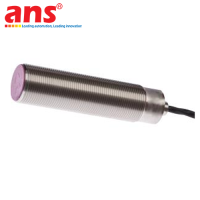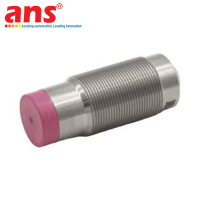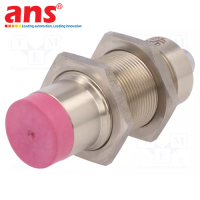
Leuze RK3CL1.A3/6T-M8 Laser Retro-Reflective Photoelectric Sensor
Price: Contact
Brand: Leuze
Category: Cảm biến công nghiệp
Supplier: AnhNghiSon
Origin: Germany


 0911472255
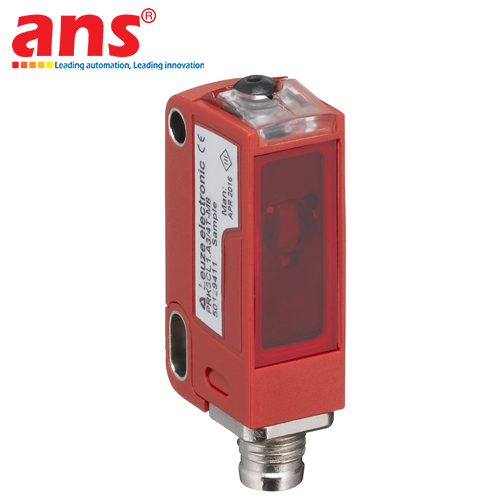
The Leuze RK3CL1.A3/6T-M8 (Global Part Number: 50143653) unpolarized laser retro-reflective photoelectric sensor is an elite sensing device within the renowned Series 3C developed by Leuze (Germany) – a global pioneer in optical automation and machine safety systems. This high-end sensor is engineered specifically to master one of the most demanding industrial challenges: detecting objects with mirror-polished surfaces, high-gloss metals, transparent shiny wrappings, and highly reflective packaging materials where standard polarized sensors frequently produce false positives or signal dropouts.
At the heart of the Leuze RK3CL1.A3/6T-M8 is its advanced coaxial Autocollimation optical design paired with a collimated Class 1 visible red laser beam (655 nm wavelength). Producing an ultra-fine 1 mm light spot at a 500 mm operating distance, the sensor can easily project through micro-apertures and detect ultra-thin workpiece contours with microscopic repeatability. It delivers a guaranteed operating range of up to 2 meters (with a limit extending to 3.8 meters using the MTKS 50x50.1 reflector). The unpolarized optical principle enables the receiver to reliably distinguish the retro-reflected beam from direct surface glares, establishing unprecedented detection stability.
Engineered for extreme performance and environmental endurance, the RK3CL1.A3/6T-M8 achieves an astonishing 3,000 Hz switching frequency with a response time of just 0.17 ms (170 µs), making it ideal for ultra-fast packaging and robotic sorting lines. The miniature housing is constructed from rugged PC-ABS plastic with a PMMA optical window, rated to IP67 and IP69K ingress protection, and certified under ECOLAB standards for washdown chemical resistance. Operating flawlessly across extreme ambient temperatures from -40°C to +55°C, the device features a flexible Push-Pull transistor output (PNP light-switching / NPN dark-switching), intuitive Teach-in pushbuttons, and a robust M8 4-pin metal connector for seamless integration into high-speed automation architectures.
The Leuze RK3CL1.A3/6T-M8 (Global Part Number: 50143653) unpolarized laser retro-reflective photoelectric sensor is an elite sensing device within the renowned Series 3C developed by Leuze (Germany) – a global pioneer in optical automation and machine safety systems. This high-end sensor is engineered specifically to master one of the most demanding industrial challenges: detecting objects with mirror-polished surfaces, high-gloss metals, transparent shiny wrappings, and highly reflective packaging materials where standard polarized sensors frequently produce false positives or signal dropouts.
At the heart of the Leuze RK3CL1.A3/6T-M8 is its advanced coaxial Autocollimation optical design paired with a collimated Class 1 visible red laser beam (655 nm wavelength). Producing an ultra-fine 1 mm light spot at a 500 mm operating distance, the sensor can easily project through micro-apertures and detect ultra-thin workpiece contours with microscopic repeatability. It delivers a guaranteed operating range of up to 2 meters (with a limit extending to 3.8 meters using the MTKS 50x50.1 reflector). The unpolarized optical principle enables the receiver to reliably distinguish the retro-reflected beam from direct surface glares, establishing unprecedented detection stability.
Engineered for extreme performance and environmental endurance, the RK3CL1.A3/6T-M8 achieves an astonishing 3,000 Hz switching frequency with a response time of just 0.17 ms (170 µs), making it ideal for ultra-fast packaging and robotic sorting lines. The miniature housing is constructed from rugged PC-ABS plastic with a PMMA optical window, rated to IP67 and IP69K ingress protection, and certified under ECOLAB standards for washdown chemical resistance. Operating flawlessly across extreme ambient temperatures from -40°C to +55°C, the device features a flexible Push-Pull transistor output (PNP light-switching / NPN dark-switching), intuitive Teach-in pushbuttons, and a robust M8 4-pin metal connector for seamless integration into high-speed automation architectures.