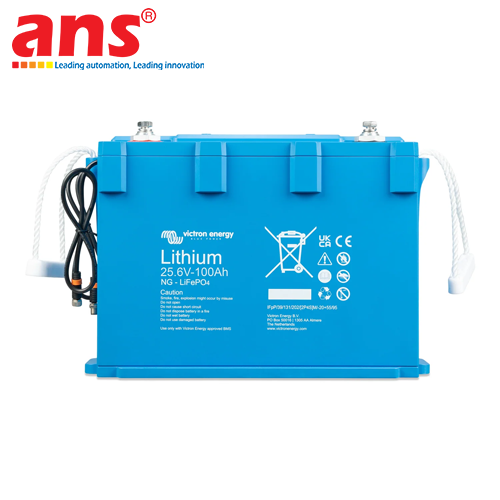
Victron Energy BAT524110620 – 25.6V 100Ah Lithium NG LiFePO₄ Battery
Price: Contact
Brand: Victron Energy
Category: Battery - Ắc quy
Supplier: AnhNghiSon
Origin: Netherlands


 0911472255
Victron Energy BAT524110620 is a 25.6V 100Ah Lithium Iron Phosphate (LiFePO₄) battery from the Lithium NG product family.
The battery provides 2,560Wh of nominal stored energy and is designed for 24V DC energy storage systems.
Its cell-level monitoring electronics communicate with a compatible Victron NG battery management system to support battery protection, monitoring and cell balancing.
Technical Specifications:
-
Manufacturer: Victron Energy
-
Product Code: BAT524110620
-
Model: LiFePO4 Battery 25.6V/100Ah NG
-
Battery Chemistry: Lithium Iron Phosphate (LiFePO₄)
-
Nominal Voltage: 25.6VDC
-
Nominal Capacity at 25°C: 100Ah
-
Nominal Energy: 2,560Wh (2.56kWh)
-
Round-Trip Efficiency: 92%
-
Maximum Continuous Discharge Current: 100A
-
Maximum 10-Second Pulse Discharge Current: 200A
-
Maximum Continuous Charge Current: 100A
-
Charging Voltage: 28–28.4V
-
Float Voltage: 27V
-
End-of-Discharge Voltage: 22.4V
-
Internal Resistance: 4mΩ
-
Self-Discharge: ≤3% per month at 25°C
-
Cycle Life at 80% DoD: 2,500 cycles
-
Cycle Life at 70% DoD: 3,000 cycles
-
Cycle Life at 50% DoD: 5,000 cycles
-
Cycle Life Reference: Remaining capacity ≥80% of nominal
-
Discharge Temperature: −20°C to +50°C
-
Charging Temperature: +5°C to +50°C
-
Storage Temperature: −45°C to +70°C
-
Ingress Protection: IP65
-
Power Terminals: M8
-
Dimensions (H × W × D): 235 × 341 × 160 mm
-
Approximate Weight: 19kg
-
BMS Communication: Digital interface with M8 circular connector
-
Bluetooth Connectivity: Via compatible NG BMS
-
Mounting: Strap or mounting brackets
Safety and Transportation Notes:
The battery requires a compatible Victron NG BMS for system operation and protection.
Charging must remain within the manufacturer's specified temperature limits.
The battery must not be installed with its electrical terminals facing downward.
Lithium batteries are regulated as dangerous goods for transportation. Applicable packaging, marking, documentation and shipping requirements must be confirmed before dispatch.
Certifications applicable to individual battery cells should not be interpreted as automatic certification of the complete battery system.