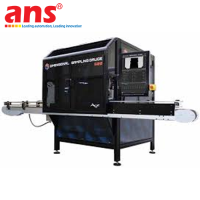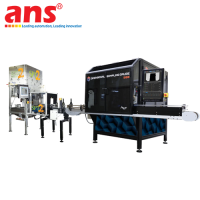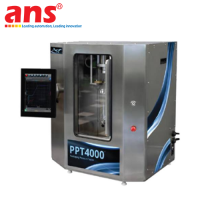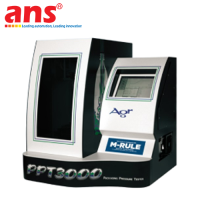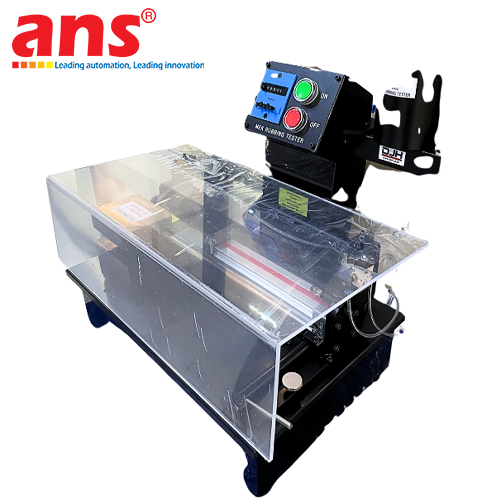
DJH Korea MEK SCRUB TESTER Paint Solvent Resistance Rub Testing Machine Genuine Korea
Price: Contact
Brand: DJH Korea
Category: Thiết bị đo lường & Kiểm tra
Supplier: AnhNghiSon
Origin: Korea


 0911472255
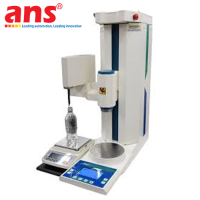
The DJH Korea MEK SCRUB TESTER (MEK Rub Test Machine), manufactured by DJH Korea / DJH Designs, is a premier global testing standard developed to resolve operator-to-operator variations during manual rub testing procedures. By automating the mechanical rubbing process with cotton pads saturated with Methyl Ethyl Ketone (MEK) solvent under a constant vertical load, the instrument ensures 100% repeatable, reproducible cure assessment and solvent resistance evaluation from laboratory formulation stages to high-speed coil coating production lines.
The groundbreaking technological innovation of the DJH MEK Scrub Tester is its completely pneumatic architecture (All-Pneumatic System). Because the unit operates entirely on compressed air without electrical circuits or electric motors, it is inherently intrinsically safe. This completely eliminates explosion and fire hazards when working in volatile environments with Methyl Ethyl Ketone (MEK) vapors. Furthermore, the semi-automated design drastically minimizes operator contact with and exposure to hazardous chemical solvents. Technicians simply clamp the test specimen onto the bed, preset the desired stroke count via the front panel pneumatic counter, close the safety cover, and press the start button. The machine automatically carries out the test sequence, shuts off solvent flow upon reaching the preset stroke threshold, and resets the rubbing head to its origin, allowing QC technicians to multitask safely.
The instrument strictly complies with recognized international testing designations including ASTM D7835, ASTM D5402, ASTM D4752, and ECCA T11. It incorporates a standardized constant-pressure dead weight rubbing block—3.0 kg (6.8 lbs) for ASTM methods and 1,000 g for European standards—providing uniform mechanical pressure across an 8-inch (203 mm) stroke length at a constant reciprocating speed of 70 double rubs per minute. The integrated 425 cc solvent reservoir features a precision metering needle valve, delivering steady pad saturation while preventing solvent wastage. The DJH MEK Scrub Tester is an indispensable testing benchmark for pre-painted galvanized iron (PPGI/PPGL) mills, coil coaters, automotive finishing plants, paint and resin manufacturing laboratories, and third-party materials inspection authorities.
• Manufacturer: DJH Korea / DJH Designs
• Origin: 100% Korea (South Korea)
• Product Type: Pneumatic Solvent Rub / Scrub Test Machine (MEK Scrub Tester)
• Model: MEK SCRUB TESTER
• Applicable Standards: ASTM D7835, ASTM D5402, ASTM D4752, ECCA T11
• Operating Drive System: 100% All-Pneumatic System (Intrinsically safe, no electrical hazard)
• Stroke Length: 203 mm (8 inches)
• Stroke Frequency: 70 double rubs per minute
• Mass of Rubbing Block:
- ASTM Standard: 3.0 kg (6.8 lbs)
- European Standard: 1,000 g
• Cycle Counter: Front-panel mounted pneumatic stroke counter, adjustable from 1 to 99,999 strokes (with auto shut-off)
• Solvent Reservoir Capacity: 425 cc (features adjustable solvent flow metering valve and automatic shut-off)
• Rubbing Pad Specification: 1½ × 1¾ inch, 2-ply cotton pad (quick-change pad system)
• Standard Test Panel Dimensions: 127 mm × 305 mm (5 × 12 inches)
• Maximum Specimen Thickness: 3.2 mm (1/8 inch) - thicker panels supported with simple fixture adjustment
• Required Operational Air Pressure: 550 kPa (80 psi) - clean, dry, non-condensing air
• Maximum Supply Air Pressure: 965 kPa (140 psi)
• Air Consumption: 66.54 L/min @ 550 kPa (2.35 SCFM @ 80 psi)
• Air Supply Inlet Connection: 1/4" NPT (recommended minimum flexible air hose: 1/4" I.D.)
• Electrical Power Requirements: None (purely pneumatic mechanical apparatus)
• Physical Dimensions (Width × Depth × Height): 457 × 483 × 483 mm (18 × 19 × 19 inches)
• Unit Net Weight: 28.3 kg (62.5 lbs)
• Applicable Industries: Pre-painted steel coil manufacturing (Coil Coating / Continuous Galvanizing Lines), industrial paint and chemical resin R&D, automotive parts powder and liquid coating lines, transport container fabrication, metal domestic appliances (refrigerators, air conditioning housings), architectural metal panels, and accredited QA/QC materials testing laboratories.